01
Boring technology, chosen deliberately
Preference for well-understood tools with long support horizons. New technology is adopted when it removes a specific, named problem — not because it is new.
Software engineering practice
BIRD & GORTON LTD is an information technology company working on custom software, business systems, integrations and the infrastructure that supports them. The work is deliberately unglamorous: define the problem precisely, build the smallest thing that solves it well, and leave behind a system the client's own people can maintain.

Overview
BIRD & GORTON LTD works with organisations whose daily operations depend on software, whether that software faces customers or runs quietly behind an office wall. The company takes on work where the technical problem is real and the constraints are known: an application that must be built, a process that must be automated, two systems that must exchange data reliably, or a platform that has become difficult to change.
Engagements begin with understanding rather than with a proposal. Before an architecture is drawn or a framework chosen, the problem is described in ordinary language and agreed with the people who will live with the result. That single habit removes most of the misunderstanding that makes software projects expensive.
Core capabilities
Web applications and internal platforms built from a defined domain model, with explicit state handling, predictable data flow and interfaces that reflect how the work is actually performed.
Connecting systems that were never designed to talk to each other: scheduled synchronisation, event-driven messaging, API layers, transformation logic and reconciliation reporting.
Environments defined in code, repeatable build and release pipelines, observability, backup and restore procedures, and cost-aware use of cloud resources.
Structured review of an existing codebase, architecture or delivery process, followed by a written account of the risks found and the sequence in which they can reasonably be addressed.
Problems addressed

Service categories
Each category is described in detail on the Services page, including typical scope and the general approach to delivery.
Build
Connect
Operate
Advise
Delivery process
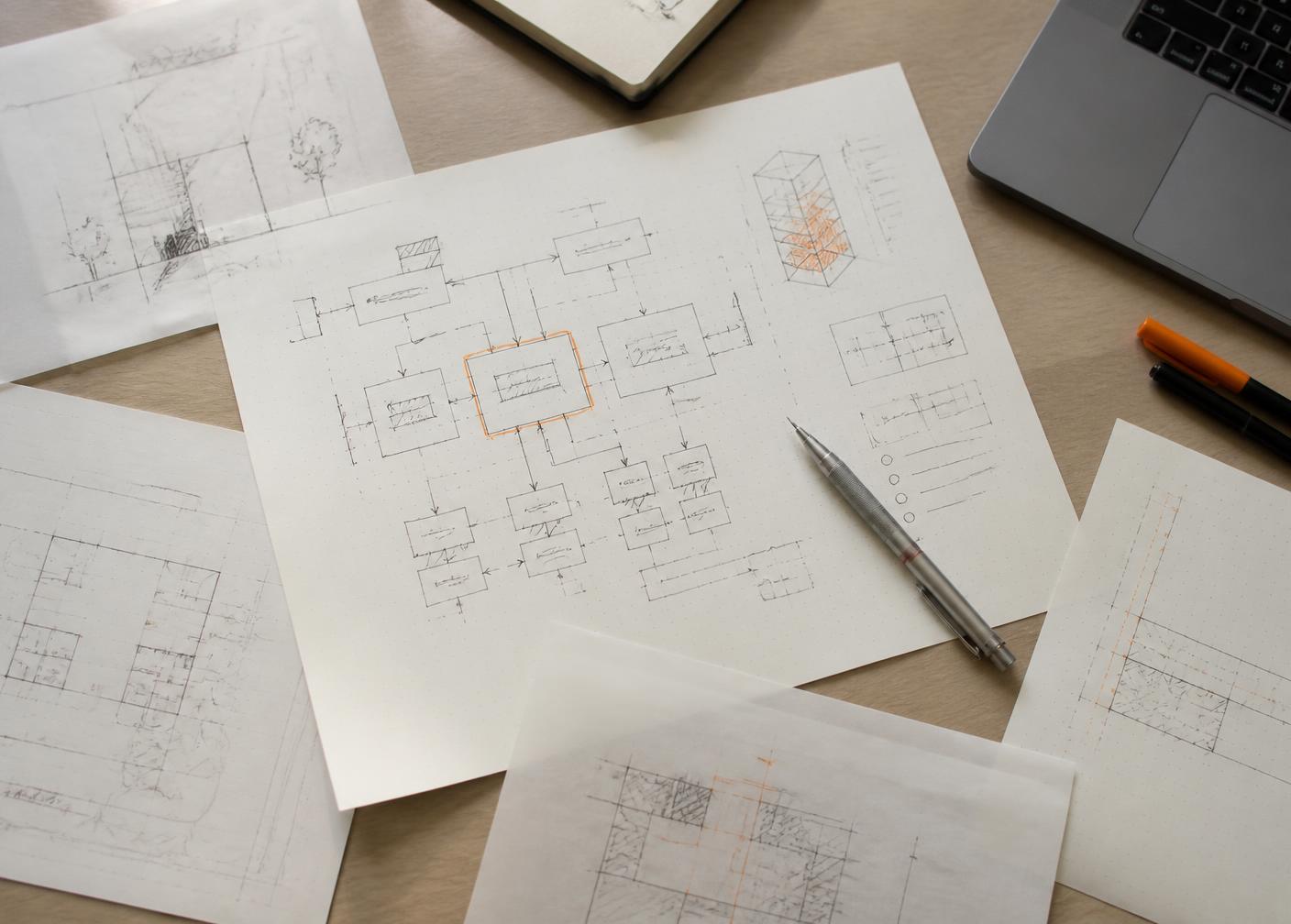
The sequence below describes a full engagement. A short piece of work compresses it; a long one repeats phases three and four. The order does not change, because each phase depends on the written output of the one before it.
Phase one / 01
Conversations with the people who use the system, a review of the existing technical material, and a written statement of the problem in plain language before any solution is proposed.
Phase two / 02
An outline of the intended architecture, the boundaries of the work, the assumptions being made and the decisions that still need an answer. Scope is agreed in writing.
Phase three / 03
Work is delivered in small, demonstrable pieces. Each increment is deployable, tested and reviewed, so direction can be corrected early rather than at the end.
Phase four / 04
Automated checks, operational documentation, deployment and rollback procedures, and a handover that leaves the client's own team able to operate and extend the system.
Phase five / 05
Ongoing correction, dependency maintenance and measured improvement, with a clear record of what changed and why.
Engineering principles
01
Preference for well-understood tools with long support horizons. New technology is adopted when it removes a specific, named problem — not because it is new.
02
Code is read far more often than it is written. Naming, structure and explicitness are treated as engineering requirements, not stylistic preferences.
03
Builds, tests, migrations and deployments run the same way on every machine. Manual steps are documented where automation is not yet justified.
04
Architectural choices are written down with their context and trade-offs, so that future maintainers understand the reasoning rather than guessing at it.
Non-functional requirements
These qualities are difficult to add to a finished system and inexpensive to build into one. They are treated as requirements from the first design conversation and revisited at every review.

Types of organisation
The following describes the categories of organisation the company is equipped to support. It is a statement of capability rather than a list of engagements.
Practices that manage client work, documents and billing across several disconnected tools, and need consistent records across them.
Logistics, field service, manufacturing and distribution work where scheduling, tracking and reporting drive daily decisions.
Teams maintaining a customer-facing application who need additional engineering depth, a technical review, or a modernisation path.
Organisations with limited internal technical capacity that need dependable systems and clear, unhurried explanations.
Collaboration
Proposals, scope and decisions exist in writing so they can be reviewed, questioned and referred back to later.
Each engagement has a named engineering contact who is responsible for progress and for raising problems early.
Every estimate is presented together with what it assumes. When an assumption proves wrong, the estimate is revised and the reason explained.
Source code, infrastructure definitions and documentation belong to the client and are handed over in a usable state.
In summary
BIRD & GORTON LTD builds and looks after software systems for organisations that need technology to be dependable rather than impressive. Enquiries describing the current situation, the constraints involved and the outcome being sought are welcome by email.
Enquiries
BIRD & GORTON LTD
priscillaellis19716@gmail.com